so could someone help me?
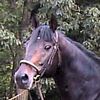
My stallion, Rocking Trick, is a very dark bay (black horse with a dash of brown on the muzzle and stifles) with a miniscule star, and one ring around a pastern and black spots all along the coronary band. So far, bred to mares of all colors, he has produced over 90% dark bays. There have been maybe 3 foals in four years who had white on legs other than just a ring, and white on the face - typically limited to a star. There was one all white filly stillborn..
Anyhow, here is my (dumb) question. I have read that the coronary spots are typically symptomatic of a white suppression gene. Since there HAVE actually been a couple or more foals with more white, would that mean he is heterozygous for the white suppression gene?
What is the composition of the genetic strand that produces a dark bay, vs a regular bay? In all this time he has only produced a couple of bays who were NOT dark bay - dam's color didn't seem to matter, ie: chestnut or bay.
I am Not a Color Geneticist..
Moderators: Roguelet, WaveMaster, Jorge, Sunday Silence
I am Not a Color Geneticist..
So Run for the Roses, as fast as you can.....
-
RiddleMeThis

- Allowance Winner
- Posts: 371
- Joined: Sun Apr 13, 2008 6:28 am
Re: I am Not a Color Geneticist..
It could, or it could be that the mare had a "stronger" white gene.madelyn wrote:I have read that the coronary spots are typically symptomatic of a white suppression gene. Since there HAVE actually been a couple or more foals with more white, would that mean he is heterozygous for the white suppression gene?
Brown (which is what your horse is) is from At. Its another alllele of the agouti gene. It is dominant over "a". Bay "A" is dominant over it.What is the composition of the genetic strand that produces a dark bay, vs a regular bay? In all this time he has only produced a couple of bays who were NOT dark bay - dam's color didn't seem to matter, ie: chestnut or bay.
What that means is that (depending on agouti status) when bred to a black, he will only have black or brown foals, never bay. When bred to a brown, he will either have black or brown foals never bay. When bred to a bay, he may have bay, brown, or black babies. When bred to a chestnut bay, brown, or black are all posssible.
All of that of course is dependent on agouti status and I left out chestnut.
There is no tan gene.I have no idea about the white but maybe the reason he is throwing dark bays is because it's not the agouti bay gene at work but the tan gene?
Check out my Equine Genetics blog! Updated April 25th with Splashed White!!!
http://equinegenetics.blogspot.com/
http://equinegenetics.blogspot.com/
-
RiddleMeThis
- Allowance Winner
- Posts: 371
- Joined: Sun Apr 13, 2008 6:28 am
No, brown is not referred to as tan.Truly wrote:I thought the brown gene was also referred to as the tan gene?
What does the t stand for?
I believe the "t" is a carry over from mice. Not sure what it referenced there, but it has never been called tan in horses.
Check out my Equine Genetics blog! Updated April 25th with Splashed White!!!
http://equinegenetics.blogspot.com/
http://equinegenetics.blogspot.com/
-
angrovestud

- Allowance Winner
- Posts: 391
- Joined: Fri Oct 31, 2008 6:33 am
- Location: North Yorkshire England
- Contact:
from Tobiano breeding we recognise earmin spots of possible colour genes not otherwise displayed in the Phenotype, but possibly a good cross with a louder express coloured horse ie tobiano or overo splash sabino frame.
A coloured leaving its mark
Angrove stud breeding your racing colours
I am dyslexic it can be funny!

Angrove stud breeding your racing colours
I am dyslexic it can be funny!

-
RiddleMeThis
- Allowance Winner
- Posts: 371
- Joined: Sun Apr 13, 2008 6:28 am
No, because it's different.Truly wrote:KarenK on the Horse and Hound breeding forum calls it the tan gene.
Some other horsey sites refer to it as tan as well.
I googled it and dog and rabbit colours call 'at' or 'At' the tan point gene.
Maybe it's just horses that call it brown because it's easier?
It doesn't cause tan points on a horse. Just like we dont call Cream albino, even though it is. Because it's different.
And dog colors are possibly the WORST to go to. Many breeds call the exact same thing completely different things. Like merle. Some breeds call it Merle, others Dapple. Etc etc.
It's NOT tan in horses.
Check out my Equine Genetics blog! Updated April 25th with Splashed White!!!
http://equinegenetics.blogspot.com/
http://equinegenetics.blogspot.com/
-
Truly

- Allowance Winner
- Posts: 251
- Joined: Mon Mar 31, 2008 5:13 pm
- Location: Just outside London, UK
- Contact:
I know they aren't dogs or rabbits and obviously I don't call a horse a tan , I'd call it brown BUT the point I'm trying to clarify is 'at' stands for tan, I'm asking an expert (because I'm not) to explain why 'at' is not the same in all animals?
We don't say an agouti horse, we say a bay horse...dog or rabbit people maybe refer to the same gene as another colour that looks similar to bay?
Has anyone googled a proper website for dog and rabbit colour genetics to see what I am referring to?
I'm trying to have sn informative discussion not an argument but am sensing some hostility..but am possibly misreading how it sounds in text
We don't say an agouti horse, we say a bay horse...dog or rabbit people maybe refer to the same gene as another colour that looks similar to bay?
Has anyone googled a proper website for dog and rabbit colour genetics to see what I am referring to?
I'm trying to have sn informative discussion not an argument but am sensing some hostility..but am possibly misreading how it sounds in text
-
angrovestud
- Allowance Winner
- Posts: 391
- Joined: Fri Oct 31, 2008 6:33 am
- Location: North Yorkshire England
- Contact:
 I remember the post Truly.
-
xfactor fan
- Breeder's Cup Winner
- Posts: 2212
- Joined: Thu Sep 16, 2004 8:46 pm
Long ago brown horses were sometimes described as black and tan. Telling a true black, a dark brown and a dark bay apart is still difficult.
Madelyn, you are looking at the interaction of at least three different sets of genes. Base Coat, Agouti (bay) and Sabino, or other white markings.
The base coat color is either Black, or Red. Black is dominant, and is named for the Extension gene location in mice. Expressed as E, red is recessive and is expressed as e.
Any given horse is either
EE, (black on both chromosomes) Black based coat color
ee, (red on both chromosomes) Red based coat color
Ee, (black on one chromosomes red on the other chromosome) Black based coat color
Has Rocky every had a chestnut foal? If not he's likely to be EE, so all his foals will be black based.
Agouti--also named from the mice genes--lives on a different chromosome.
It seems to have (to date we know about ) 4 different genes. And any horse can have two of the 4 present. They are a, A, At, A(wild) (Ive forgotten what the correct designation for wild bay is.)
Two copies of the gene will give you:
aa--recessive expresses as Black on a black base coat
AA dominant expresses as Bay on a black base coat
At Brown
A(wild) Light bay with low dark points.
The wild bays are very deceptive, and can be mistaken for liver chestnuts, especially if the horse has high white leg markings.
A(wild) is most dominant
A Bay comes in second
At third
aa last place.
Has Rocky ever sired a black foal? If he has he's likely to be At a and carries one copy of At (brown) and one of a (black)
If he's (At a) Bred to black or brown mares he's going to throw black or brown foals.
And if this isn't complicated enough, Sabino which is where a lot of white markings come from is linked to the E gene. Linkage is where the genes aren't related, but live on the same chromosome, so they move together.
Using Roan as an example a horse could be Ee, RN rn. base coat black, but carrying the red base coat as a recessive, and on copy of the Roan gene.
IF the linkage is E rn, and e RN, then the horse will pass the black base coat and regular color together, and the red base coat and Roan color.
So it may be that Rocky doesn't have a lot of white to pass along, or that he's got a lot of white suppression genes that are keeping the white markings at a minimum.
Black based horses in general tend to suppress white markings.
The white foal that was still born, what color was the mare?
Hope this helps.
Madelyn, you are looking at the interaction of at least three different sets of genes. Base Coat, Agouti (bay) and Sabino, or other white markings.
The base coat color is either Black, or Red. Black is dominant, and is named for the Extension gene location in mice. Expressed as E, red is recessive and is expressed as e.
Any given horse is either
EE, (black on both chromosomes) Black based coat color
ee, (red on both chromosomes) Red based coat color
Ee, (black on one chromosomes red on the other chromosome) Black based coat color
Has Rocky every had a chestnut foal? If not he's likely to be EE, so all his foals will be black based.
Agouti--also named from the mice genes--lives on a different chromosome.
It seems to have (to date we know about ) 4 different genes. And any horse can have two of the 4 present. They are a, A, At, A(wild) (Ive forgotten what the correct designation for wild bay is.)
Two copies of the gene will give you:
aa--recessive expresses as Black on a black base coat
AA dominant expresses as Bay on a black base coat
At Brown
A(wild) Light bay with low dark points.
The wild bays are very deceptive, and can be mistaken for liver chestnuts, especially if the horse has high white leg markings.
A(wild) is most dominant
A Bay comes in second
At third
aa last place.
Has Rocky ever sired a black foal? If he has he's likely to be At a and carries one copy of At (brown) and one of a (black)
If he's (At a) Bred to black or brown mares he's going to throw black or brown foals.
And if this isn't complicated enough, Sabino which is where a lot of white markings come from is linked to the E gene. Linkage is where the genes aren't related, but live on the same chromosome, so they move together.
Using Roan as an example a horse could be Ee, RN rn. base coat black, but carrying the red base coat as a recessive, and on copy of the Roan gene.
IF the linkage is E rn, and e RN, then the horse will pass the black base coat and regular color together, and the red base coat and Roan color.
So it may be that Rocky doesn't have a lot of white to pass along, or that he's got a lot of white suppression genes that are keeping the white markings at a minimum.
Black based horses in general tend to suppress white markings.
The white foal that was still born, what color was the mare?
Hope this helps.