Five Star Day
Moderators: Roguelet, WaveMaster, madelyn
Five Star Day
What a start this guy is off to uless one got by me somewhere he has 3 winners from as many starters this year! The colt for Walden who also trainner FSD I do believe looked very well yesterday & has the dam to be a very fast horse. I remember he was a very big buzz horse in Ken when he went to stud & in pics def looks like a horse but I never could get over the fact that he is out of a Vanlandingham mare but maybe I was just wrong as his colts are off to the start some friends of mine in Ken thought he would be. We shall see I suppose.
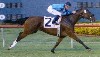
The Vanlandingham connection wouldn't bother me. He was a very good racehorse son of Cox's Ridge, who himself is known for being a good broodmare sire. FSD was the first stallion I checked out last week, and he is a very nicely built, classy horse, and was a very good sprinter. He toes in slightly, but that's the only potential problem I noted, and it wasn't much. Vanlandingham spent many of his stud years getting poor mares sent to him.
Rocking H
To correct myself it was Beau Greely that trained Five Star Day. I also disagree with henthorn on Vanlandinham, a Coxs Ridge never made it at stud & Vans produce was just plain horriabe. I'm sure his later mares were pretty bad but he still had a shot early in his career to get something going. Maybe FSD can turn the corner but I cant get over Van sitting right there in his pedigree but thats what makes the breeding game what it is no one is ever totally right or wrong.
I see some strengths in Five Star Day's female line. The 1st dam is a half sister to Marquetry and the 2nd dam was a very good producer. Farther back, you have Tourbillon strains coming through Lalun in the mare's damline and Crozier in the sire's damline.
Each of the three money earners listed in the database had dams with Northern Dancer in the sireline (complimenting Five Star Day's Northern Dancer through his dam) and additional strains of Tourbillon coming through the distaff side.
These might be among some of the factors in play in this young stallion's success to date.
Laurie
Each of the three money earners listed in the database had dams with Northern Dancer in the sireline (complimenting Five Star Day's Northern Dancer through his dam) and additional strains of Tourbillon coming through the distaff side.
These might be among some of the factors in play in this young stallion's success to date.
Laurie
So many pedigrees...so little time. (C)

Hi All,
The Five Star Days that I've seen (I just evaluated some more at the FT 2yo sale) are different from foals by other Carson City sons, more size, better bone and they have more structure. They don't present as one dimensional sprinters like City Zip's foals (similar to other Carson City sons) do. I think you'll find that Five Star Day's will be able to handle some distance and will prove to have more class and ability than we've seen from the likes of Boone's Mill, Ormsby, Good And Tough, etc.
I'd suggest that the folks who don't like Vanlandingham haven't given much consideration to him past his own failures at stud. I'd go a lot further than Henthorn did and say that I see him as the essential link to what I believe will be solid success as a sire for Five Star Day.
Introduction of new blood to a particular line is one of the most explosive ways to 'supercharge' a sire line and move it to prominence. The introduction of Teddy to Phalaris line sires (even though both are Bend Or line stallions themselves) created its first prominent stallion in Tom Fool (1949). This was not the first introduction of Teddy to Phalaris, but this is the first instance of success in creating an impact stallion with the cross. The same cross is responsible for creating Raise A Native and then was further proliferated through Northern Dancer's sons and Mr. Prospector (and his sons), etc. A formula develops to preserve the prepotency of the sire line with the introduced new blood. In the case of Raise A Native it was adding that blood in succeeding generations. If you skip a generation you change the dynamic and start the sire line towards subversion (the influence will come through the dams, not the sires). If you overload the new blood, you may get wonderful horses, and excellent sires, but their ability to create top sires will be diminished.
You can see this clearly in the case of Alydar, Affirmed and Mr. Prospector. Raise A Native is the result of the first introduction of (new) Teddy blood to the Phalaris sire of Sickle – with explosive results. Raise A Native’s son, Exclusive Native (sire of Affirmed) was a superior sire – without the re-introduction of Teddy blood.
When Raise A Native was bred to Sweet Tooth (overloaded with Teddy 5x6x5) the result was a great racehorse, brilliant sire and weak sire of sires in Alydar.
When Exclusive Native (with no returned Teddy) was bred to Won’t Tell You (very overloaded with Teddy 4x5x6x5) the result was a great racehorse, solid sire and very weak sire of sires in Affirmed (and a fine broodmare sire).
When Raise A Native was bred to Gold Digger (Teddy 4x6), the result was Mr. Prospector, a fast race horse, brilliant sire and magnificent sire of sires whose best sons at stud have return of Teddy blood. I think you’ll find that many of the line affinities that have developed with Forty Niner, Fappiano, etc. can be traced to the amount and tolerance of Teddy blood (and Mr. Prospector line is quite tolerant of Teddy).
To a large extent this same pattern is evidenced in Dr. Fager (overloaded with Teddy 4x5x5), a great race horse, excellent sire, weak sire of sires and superior broodmare sire. Buckpasser (slightly overloaded with Teddy 4x4) was a great race horse, an excellent sire, moderate sire of sires and brilliant broodmare sire. Mr. Prospector appears to prove that the best quality of new Teddy was the equivalent of 5x5 and he has emerged as a brilliant broodmare sire as well.
Hyperion's worldwide influence in 1960 was similar to (perhaps not as pervasive) as Northern Dancer is today. In the ensuing 45 years, Hyperion's male line has diminished dramatically and nearly (if not entirely) disappeared in North America.
We do know that there was (at least at one time) a strong affinity between Hyperion and Phalaris (especially through Nearco whose son Nearctic is out of the Hyperion mare Lady Angela).
Turn-To are Phalaris line stallions that have never developed sire with Hyperion blood (in North America). The initial hypothesis might be that Hyperion is not compatible blood with siring success for Turn-To line. This is changing.
Halo is free of Hyperion. Best Turn (sire of Cox's Ridge) has Hyperion in the 4th generation and is the first successful stallion of this line with significant Hyperion (5th generation or closer) in North America. Most stallions of this line - even through Roberto have no Hyperion at all.
Hyperion wasn’t returned in Best Turn’s son, Cox’s Ridge, nor most of his sons like Out of Place and Sultry Song. Hyperion is returned High Brite, a useful but not impacting sire.
We've seen that once a blood line is introduced, like Teddy to Phalaris the prepotency of creating sires is linked to when and how much of that blood is returned. Sunday Silence is the first successful stallion of the Turn-To line with significant Hyperion blood (5x6). Southern Halo is another with Hyperion in his 5th generation. It’s notable that these two stallions had most if not all of the success outside of North America, with mare bases that have more affinity for Hyperion.
The difference can be very subtle. Halo line stallions with Hyperion in the 6th generation in North America have fared well like Saint Ballado and his full brother Devil’s Bag who have Hyperion in the 6th generation. Having Hyperion only one generation closer, Southern Halo has not been anywhere near as impacting a sire here in North America as he has been in South America.
Teddy’s sire line, once powerful in North America all the way through top siring sons like Sir Gallahad, Bull Dog and Bull Lea (1946), waned and is now only available through Damascus’ sire line that is nearing extinction. On the other hand, Teddy is now the most powerful deep influence in most pedigrees in North America today, just as St. Simon was a generation or so ago (and he too had once had a virulent sire line).
Vanlandingham was a very good race horse, a weak sire and unable to produce even marginal siring sons. Clearly some of this was due to opportunity, but we see that his dam, Populi brings has Hyperion 4x5, making Vanlandingham 6x6x5 Hyperion and for this sire line it is an overload of Hyperion blood.
Vanlandingham is subverted, only able to have influence on the bottom side of a pedigree now. If he is effective it is really as a packager of blood – in this case Hyperion. Mr. Prospector’s line has never had significant affinity with Hyperion unless packaged by Northern Dancer line. In the case of Five Star Day, he has been able to assimilate the Hyperion blood through is mother (8S x 8s x 9S x 8D x 8D x 7D x 7d) to at least be a good race horse. What is not fully known yet is if this blood cross will result in his being a strong sire and then a sire of sires. What I can tell you is that his foals display the bone, size, structure and in some cases the coarseness that we would expect to see in Cox’s Ridge and Turn-To line stallions. Through Vanlandingham, Hyperion has been packaged with Turn-To and seems to be making a different type of foal than we’d come to expect from Carson City sires.
It’s late – have to go to bed ;
;
Sorry this was so long.
Regards,
Pete
The Five Star Days that I've seen (I just evaluated some more at the FT 2yo sale) are different from foals by other Carson City sons, more size, better bone and they have more structure. They don't present as one dimensional sprinters like City Zip's foals (similar to other Carson City sons) do. I think you'll find that Five Star Day's will be able to handle some distance and will prove to have more class and ability than we've seen from the likes of Boone's Mill, Ormsby, Good And Tough, etc.
I'd suggest that the folks who don't like Vanlandingham haven't given much consideration to him past his own failures at stud. I'd go a lot further than Henthorn did and say that I see him as the essential link to what I believe will be solid success as a sire for Five Star Day.
Introduction of new blood to a particular line is one of the most explosive ways to 'supercharge' a sire line and move it to prominence. The introduction of Teddy to Phalaris line sires (even though both are Bend Or line stallions themselves) created its first prominent stallion in Tom Fool (1949). This was not the first introduction of Teddy to Phalaris, but this is the first instance of success in creating an impact stallion with the cross. The same cross is responsible for creating Raise A Native and then was further proliferated through Northern Dancer's sons and Mr. Prospector (and his sons), etc. A formula develops to preserve the prepotency of the sire line with the introduced new blood. In the case of Raise A Native it was adding that blood in succeeding generations. If you skip a generation you change the dynamic and start the sire line towards subversion (the influence will come through the dams, not the sires). If you overload the new blood, you may get wonderful horses, and excellent sires, but their ability to create top sires will be diminished.
You can see this clearly in the case of Alydar, Affirmed and Mr. Prospector. Raise A Native is the result of the first introduction of (new) Teddy blood to the Phalaris sire of Sickle – with explosive results. Raise A Native’s son, Exclusive Native (sire of Affirmed) was a superior sire – without the re-introduction of Teddy blood.
When Raise A Native was bred to Sweet Tooth (overloaded with Teddy 5x6x5) the result was a great racehorse, brilliant sire and weak sire of sires in Alydar.
When Exclusive Native (with no returned Teddy) was bred to Won’t Tell You (very overloaded with Teddy 4x5x6x5) the result was a great racehorse, solid sire and very weak sire of sires in Affirmed (and a fine broodmare sire).
When Raise A Native was bred to Gold Digger (Teddy 4x6), the result was Mr. Prospector, a fast race horse, brilliant sire and magnificent sire of sires whose best sons at stud have return of Teddy blood. I think you’ll find that many of the line affinities that have developed with Forty Niner, Fappiano, etc. can be traced to the amount and tolerance of Teddy blood (and Mr. Prospector line is quite tolerant of Teddy).
To a large extent this same pattern is evidenced in Dr. Fager (overloaded with Teddy 4x5x5), a great race horse, excellent sire, weak sire of sires and superior broodmare sire. Buckpasser (slightly overloaded with Teddy 4x4) was a great race horse, an excellent sire, moderate sire of sires and brilliant broodmare sire. Mr. Prospector appears to prove that the best quality of new Teddy was the equivalent of 5x5 and he has emerged as a brilliant broodmare sire as well.
Hyperion's worldwide influence in 1960 was similar to (perhaps not as pervasive) as Northern Dancer is today. In the ensuing 45 years, Hyperion's male line has diminished dramatically and nearly (if not entirely) disappeared in North America.
We do know that there was (at least at one time) a strong affinity between Hyperion and Phalaris (especially through Nearco whose son Nearctic is out of the Hyperion mare Lady Angela).
Turn-To are Phalaris line stallions that have never developed sire with Hyperion blood (in North America). The initial hypothesis might be that Hyperion is not compatible blood with siring success for Turn-To line. This is changing.
Halo is free of Hyperion. Best Turn (sire of Cox's Ridge) has Hyperion in the 4th generation and is the first successful stallion of this line with significant Hyperion (5th generation or closer) in North America. Most stallions of this line - even through Roberto have no Hyperion at all.
Hyperion wasn’t returned in Best Turn’s son, Cox’s Ridge, nor most of his sons like Out of Place and Sultry Song. Hyperion is returned High Brite, a useful but not impacting sire.
We've seen that once a blood line is introduced, like Teddy to Phalaris the prepotency of creating sires is linked to when and how much of that blood is returned. Sunday Silence is the first successful stallion of the Turn-To line with significant Hyperion blood (5x6). Southern Halo is another with Hyperion in his 5th generation. It’s notable that these two stallions had most if not all of the success outside of North America, with mare bases that have more affinity for Hyperion.
The difference can be very subtle. Halo line stallions with Hyperion in the 6th generation in North America have fared well like Saint Ballado and his full brother Devil’s Bag who have Hyperion in the 6th generation. Having Hyperion only one generation closer, Southern Halo has not been anywhere near as impacting a sire here in North America as he has been in South America.
Teddy’s sire line, once powerful in North America all the way through top siring sons like Sir Gallahad, Bull Dog and Bull Lea (1946), waned and is now only available through Damascus’ sire line that is nearing extinction. On the other hand, Teddy is now the most powerful deep influence in most pedigrees in North America today, just as St. Simon was a generation or so ago (and he too had once had a virulent sire line).
Vanlandingham was a very good race horse, a weak sire and unable to produce even marginal siring sons. Clearly some of this was due to opportunity, but we see that his dam, Populi brings has Hyperion 4x5, making Vanlandingham 6x6x5 Hyperion and for this sire line it is an overload of Hyperion blood.
Vanlandingham is subverted, only able to have influence on the bottom side of a pedigree now. If he is effective it is really as a packager of blood – in this case Hyperion. Mr. Prospector’s line has never had significant affinity with Hyperion unless packaged by Northern Dancer line. In the case of Five Star Day, he has been able to assimilate the Hyperion blood through is mother (8S x 8s x 9S x 8D x 8D x 7D x 7d) to at least be a good race horse. What is not fully known yet is if this blood cross will result in his being a strong sire and then a sire of sires. What I can tell you is that his foals display the bone, size, structure and in some cases the coarseness that we would expect to see in Cox’s Ridge and Turn-To line stallions. Through Vanlandingham, Hyperion has been packaged with Turn-To and seems to be making a different type of foal than we’d come to expect from Carson City sires.
It’s late – have to go to bed
;
Sorry this was so long.
Regards,
Pete
-
chicago78
- Maiden Special Weight
- Posts: 196
- Joined: Wed Sep 22, 2004 10:44 am
- Location: Chicago, Ocala
We bought a Five Star Day colt at the March OBS sale, hip #580. He's now named Magazine Street. The colt really stood out, he worked well, came from a family with some current runners, etc. We blistered him when we brought him back to the farm, he's in training, and should ship to the track next week. He looks and trains like a good horse. I've been keeping a pretty close eye on the Five Star Day's to run so far, and they are winning early, as one would expect from a son of Carson City. But I agree with what Pete wrote, in that they don't look like one dimentional sprinters. The colt that won at Churchill the other day, Fifty Seven Flat, laid off the leaders, made a nice little move, and won pretty easily. And he had a filly, Five Star holding, run second against colts in the 2 year old stake on derby day after she had broken her maiden against colts in the first place. His other winner was a filly that cost $600K, so you'd think she's a runner. Needless to say, his early horses have shown some quality.
Five Star Day also comes from a very good female family, with Marquetry being a half brother to his dam, Reggie V. I think there's a real big chance of him making it as a sire.
Five Star Day also comes from a very good female family, with Marquetry being a half brother to his dam, Reggie V. I think there's a real big chance of him making it as a sire.
Hi Henthorn,
Glad it makes sense Perhaps it was the late hour that helped me better explain myself.
Hyperion has been most accessibly packaged for the modern breeder in the sons of Nearctic. Wild Again and Dixieland Band have been two sires who have the ability to accept and give Hyperion.
It's a bit like blood types
Pete
Glad it makes sense
Perhaps it was the late hour that helped me better explain myself.
Hyperion has been most accessibly packaged for the modern breeder in the sons of Nearctic. Wild Again and Dixieland Band have been two sires who have the ability to accept and give Hyperion.
It's a bit like blood types
Pete
-
Northlight
- Suckling
- Posts: 16
- Joined: Sun Jan 16, 2005 2:02 pm
- Location: Madison, GA
- Contact:
Question, Pete
so Pete, if you had a Vanlandingham mare out of a secretariat dam (Miss Muscles), what sires would you look to to capture the best blood in light of your analysis?
Hi Northlight,
Subversion is a corollary of my theory of Aggression.
The subverted Teddy (through the dam side) still retains considerable Aggression. Simply put, Teddy blood can be (and is successful with) aggressive sires and sire lines like Mr. Prospector and Northern Dancer.
A few postulates on Aggression (to breed exceptional foals):
1 – Sire side Aggression should be greater than dam side Aggression.
2 – Ability moves away from the norm conversely related to the difference in sire/dam Aggression (the closer the Aggression the more potential).
3 – Offspring Aggression is modified by the relation between sire/dam Aggression.
4 – There is latitude in Aggression brought to each mating by both dam and sire.
5 – Preponent sires and Transparent / Dominant mares have less latitude in Aggression than other individuals.
6 – A horses’ source Aggression (sire and dam) is modified or more flexible according to the source of the blood bred to (specifically this is the definition of a NICK).
If there is a mating between a less aggressive stallion and a more aggressive mare, the foal may be exceptional, but will tend to breed in a subverted manner. Subverted sires can get good runners, but they will not (as a rule) produce highly successful stallions.
Secretariats stud career reflects his improper use (at least to produce sires) as a stallion. He was moderately aggressive and was bred to the best mares (who are often more aggressive than their pedigree would indicate) as well as to mares from more aggressive sire lines. The result was an inability to sire top sons, but his daughters reflect Secretariat in a subverted form, with a moderate to good quotient of aggression and thus they have flourished as broodmares and broodmares of sires even when bred to aggressive sire lines.
Some methods to identify and quantify the Aggression:
1 – The quality of the siring sons of the sire (direct).
2 – The quality of the siring sons of the line (inferred).
3 – Examine the individual mating within a dam’s pedigree and the resulting quality of the foal.
Mating between non-aggressive sire and dam can (and often do) produce more aggressive foals. It’s the context of the Aggression between the sire and dam that is the key. Aggression is not absolute; it can be modified within an individual or a generation.
I suspect that Vanlandingham as a broodmare sire (and sire) was/is not very aggressive at all.
Carson City’s ability to get good runners and ordinary sires indicates that his Aggression is modified (less in this case) than his sire, Mr. Prospector. That would make him more accessible for good runners with the general population (and a wider base of broodmare sires). I’d presume (having not researched it) that Carson City has been successful with a large base of broodmare sires, and Vanlandingham (a non-aggressive Turn-To line stallion) may be similar to other sires that have daughters who have crossed well with Carson City (non-aggressive or moderately aggressive Turn-To line sires).
Using the Aggression Theory, to be a successful sire a son of Carson City would need a mare with Aggression close to, but not exceeding Carson City. This would be modified by the individual sperm/egg in a particular breeding but we need to look at the latitude of the sire and dam in relation to their own Aggression to guide us in determining if the stallion has better chances to succeed.
A good example of Aggression is the breeding of Mr. Prospector. Native Dancer line was made more Aggressive with the addition of Teddy (very close in Aggression to Native Dancer) and resulted in Raise A Native (an aggressive sire). Nasrullah was bred to Segula (more aggressive than her sire Johnstown) and produced Nashua, a superior race horse, excellent sire and weak sire of sires. We have hindsight to know that Nashua was a weak sire of sires and thus less aggressive than his own sire but able to produce a mare, Gold Digger who was close in aggression to Raise A Native and she produced Mr. Prospector. Nashua’s aggression profile is as a subverted son of Nasrullah. It is NOT coincidence that Nashua’s greatest success as a sire of sires was in South America with a less aggressive mare base (through sons like Good Manners). A similar phenomenon can be seen with Sunday Silence, Southern Halo and sons of Buckpasser like Egg Toss and Spend A Buck who has now sired several top class foals from South American mares.
Look at your mare, Miss Muscles, in light of what I’m saying. I’d be happy to discuss her in relation to Aggression on this forum.
Understand that Aggression is a top down method of analyzing blood. You don’t examine what failed, rather what has succeeded. As a breeder, you can use Aggression to examine a failed mating but there are many variables that may have contributed to the failure of one particular foal (injury, etc.). If you know may of the circumstances about the failed foal, Aggression is valuable When we see a successful foal, generally they’ve had better fortune, or been exceptional enough to overcome adversity. Since we’re breeding for successful foals, Aggression is a particularly strong tool.
Regards,
Pete
Portion of this post are copyrighted material and can’t be copied or reproduced without the expressed written consent of the author. © 2004
Subversion is a corollary of my theory of Aggression.
The subverted Teddy (through the dam side) still retains considerable Aggression. Simply put, Teddy blood can be (and is successful with) aggressive sires and sire lines like Mr. Prospector and Northern Dancer.
A few postulates on Aggression (to breed exceptional foals):
1 – Sire side Aggression should be greater than dam side Aggression.
2 – Ability moves away from the norm conversely related to the difference in sire/dam Aggression (the closer the Aggression the more potential).
3 – Offspring Aggression is modified by the relation between sire/dam Aggression.
4 – There is latitude in Aggression brought to each mating by both dam and sire.
5 – Preponent sires and Transparent / Dominant mares have less latitude in Aggression than other individuals.
6 – A horses’ source Aggression (sire and dam) is modified or more flexible according to the source of the blood bred to (specifically this is the definition of a NICK).
If there is a mating between a less aggressive stallion and a more aggressive mare, the foal may be exceptional, but will tend to breed in a subverted manner. Subverted sires can get good runners, but they will not (as a rule) produce highly successful stallions.
Secretariats stud career reflects his improper use (at least to produce sires) as a stallion. He was moderately aggressive and was bred to the best mares (who are often more aggressive than their pedigree would indicate) as well as to mares from more aggressive sire lines. The result was an inability to sire top sons, but his daughters reflect Secretariat in a subverted form, with a moderate to good quotient of aggression and thus they have flourished as broodmares and broodmares of sires even when bred to aggressive sire lines.
Some methods to identify and quantify the Aggression:
1 – The quality of the siring sons of the sire (direct).
2 – The quality of the siring sons of the line (inferred).
3 – Examine the individual mating within a dam’s pedigree and the resulting quality of the foal.
Mating between non-aggressive sire and dam can (and often do) produce more aggressive foals. It’s the context of the Aggression between the sire and dam that is the key. Aggression is not absolute; it can be modified within an individual or a generation.
I suspect that Vanlandingham as a broodmare sire (and sire) was/is not very aggressive at all.
Carson City’s ability to get good runners and ordinary sires indicates that his Aggression is modified (less in this case) than his sire, Mr. Prospector. That would make him more accessible for good runners with the general population (and a wider base of broodmare sires). I’d presume (having not researched it) that Carson City has been successful with a large base of broodmare sires, and Vanlandingham (a non-aggressive Turn-To line stallion) may be similar to other sires that have daughters who have crossed well with Carson City (non-aggressive or moderately aggressive Turn-To line sires).
Using the Aggression Theory, to be a successful sire a son of Carson City would need a mare with Aggression close to, but not exceeding Carson City. This would be modified by the individual sperm/egg in a particular breeding but we need to look at the latitude of the sire and dam in relation to their own Aggression to guide us in determining if the stallion has better chances to succeed.
A good example of Aggression is the breeding of Mr. Prospector. Native Dancer line was made more Aggressive with the addition of Teddy (very close in Aggression to Native Dancer) and resulted in Raise A Native (an aggressive sire). Nasrullah was bred to Segula (more aggressive than her sire Johnstown) and produced Nashua, a superior race horse, excellent sire and weak sire of sires. We have hindsight to know that Nashua was a weak sire of sires and thus less aggressive than his own sire but able to produce a mare, Gold Digger who was close in aggression to Raise A Native and she produced Mr. Prospector. Nashua’s aggression profile is as a subverted son of Nasrullah. It is NOT coincidence that Nashua’s greatest success as a sire of sires was in South America with a less aggressive mare base (through sons like Good Manners). A similar phenomenon can be seen with Sunday Silence, Southern Halo and sons of Buckpasser like Egg Toss and Spend A Buck who has now sired several top class foals from South American mares.
Look at your mare, Miss Muscles, in light of what I’m saying. I’d be happy to discuss her in relation to Aggression on this forum.
Understand that Aggression is a top down method of analyzing blood. You don’t examine what failed, rather what has succeeded. As a breeder, you can use Aggression to examine a failed mating but there are many variables that may have contributed to the failure of one particular foal (injury, etc.). If you know may of the circumstances about the failed foal, Aggression is valuable When we see a successful foal, generally they’ve had better fortune, or been exceptional enough to overcome adversity. Since we’re breeding for successful foals, Aggression is a particularly strong tool.
Regards,
Pete
Portion of this post are copyrighted material and can’t be copied or reproduced without the expressed written consent of the author. © 2004

Wow, Pete. This is eye-opening for me, and I'm trying to grasp it all... my mare Wild Bell is 5x5 Hyperion (and more further back) her dam's sire is Wild Again, and her sire's grandsire is Damascus... your posts are great, as it sheds a whole new angle for me to study (and hopefully understand) when looking at her pedigree...
What you're saying makes total sense, though, if I understand you correctly... Mr. Prospector is one of the most prominent/successful nicks on her report. So based on your post, the success makes sense to me now- WHY it works. And, in studying the top 5 stallions that produced a SW, I noticed they ALL have Northern Dancer (and Nasrullah) in common and I thought it was coincidence, as he's in so many pedigrees... but now I see the connection! Hopefully, I'm getting it right... on....
Thanks for a WEALTH of information!!
What you're saying makes total sense, though, if I understand you correctly... Mr. Prospector is one of the most prominent/successful nicks on her report. So based on your post, the success makes sense to me now- WHY it works. And, in studying the top 5 stallions that produced a SW, I noticed they ALL have Northern Dancer (and Nasrullah) in common and I thought it was coincidence, as he's in so many pedigrees... but now I see the connection! Hopefully, I'm getting it right...
on....
Thanks for a WEALTH of information!!
Last edited by skeenan on Fri May 27, 2005 2:52 am, edited 1 time in total.
