The "walk"
Moderators: Roguelet, hpkingjr, WaveMaster
The "walk"
Ive heard many times that a yearling or horse has the "walk" and thats what horsemen look for. Not to be naive but what is the "walk"???
-
Heather T.
- 2yo Maiden
- Posts: 88
- Joined: Mon Sep 20, 2004 3:01 pm
- Location: New York
-
yukidragon
- Starters Handicap
- Posts: 616
- Joined: Sun Oct 31, 2004 11:29 pm
- Location: Oregon
-
Intrinsic Worth
- Starters Handicap
- Posts: 691
- Joined: Sat Dec 11, 2004 2:27 pm
-
bcassidy
- Restricted Stakes Winner
- Posts: 876
- Joined: Thu Sep 16, 2004 5:36 pm
- Location: Springfield twshp, NJ
Yukidragon--close to accurate quote of D. Wayne Lukas' description of the walk of good race filly.
Tom--The walk of a great athlete is different from the walk of an average athlete, aside from the length of the stride at walk, there is a balance and fluidness that gives a great inidication of what that animals stride will be like at a full gallop. The overall conformation, coupled with the walk and followed with a scope of the throat and possibly even a heart scan will give an expert a great indication of what level that individual should be capable of performing at. Put a great pedigree behind the animal and it will sell for big dollars as a yearling. It takes a great eye to see the potential athlete as a yearling but some people just have that gift. I am sure it can be developed and refined over many years of experience but some people just have it. I think the McKathan brothers are very good at finding young athletes.
Tom--The walk of a great athlete is different from the walk of an average athlete, aside from the length of the stride at walk, there is a balance and fluidness that gives a great inidication of what that animals stride will be like at a full gallop. The overall conformation, coupled with the walk and followed with a scope of the throat and possibly even a heart scan will give an expert a great indication of what level that individual should be capable of performing at. Put a great pedigree behind the animal and it will sell for big dollars as a yearling. It takes a great eye to see the potential athlete as a yearling but some people just have that gift. I am sure it can be developed and refined over many years of experience but some people just have it. I think the McKathan brothers are very good at finding young athletes.
best regards Brendan
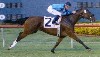
My previous trainer called it"a John Wayne walk". You remember the way he had a swagger that used his entire body? Sort of a rolling walk that started with his shoulders and arms, his torso, then his hips and legs. Like good follow-through in golf. It's not choppy, but each part is included in the flow. When a horse can fluidly walk, it will have more reach or glide when running. Combine that walk with a self-important air, and cooperativeness with handlers, and you've got a lot that most horses will never have. It can't be taught.
Last edited by henthorn on Fri Jan 07, 2005 3:48 pm, edited 1 time in total.
Rocking H
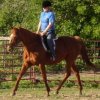
I never knew what "the walk" was until I saw it.
I was watching a 25 year old retired broodmare being walked in from the pasture.
She's small and she looks at bit more like an arabian, but she overstepped by 4-6" and swung her hips with athletisism that you would expect from a racing fit 2 year old.
More than anything it was just and overall picture in my head that clicked "ohhh... that's the walk".
Name: Arctic Belle
I've mentioned her here before because of her offspring's seemingly amazing soundness. She never produced anything national graded stakes level - but she's obviously paid her way to a good retirement.
~Adrienne
I was watching a 25 year old retired broodmare being walked in from the pasture.
She's small and she looks at bit more like an arabian, but she overstepped by 4-6" and swung her hips with athletisism that you would expect from a racing fit 2 year old.
More than anything it was just and overall picture in my head that clicked "ohhh... that's the walk".
Name: Arctic Belle
I've mentioned her here before because of her offspring's seemingly amazing soundness. She never produced anything national graded stakes level - but she's obviously paid her way to a good retirement.
~Adrienne
Heather T. wrote:A big part of it is overstep, i.e., when the horse walks, its back foot should land in front of the hoofprint left by the front foot on the same side. Not sure how this works, but I've heard many experienced horsemen say that this is an indication of athleticism.
When a horse is put together properly, its hind foot should land in the same spot its front foot left. A horse that overreaches as you mentioned would find its hind feet tripping over its front feet all the time.

Re: Hey Yuiki
Denise wrote:The other part of that quote from Lukas was "a butt like a fry cook."
Would that be square and yellow with holes?
jL, I was sure you were mistaken, but I just checked all the stallion videos at Lane's End Kentucky, and none actually appear to place the rear foot in front of the tracks of the front. The closest to it are Pleasant Tap and Smart Strike. I wonder if the term overstride relates to the opposite foot's track, since the rear foot goes forward as it's same side fore stays in place. 
Rocking H
henthorn wrote:jL, I was sure you were mistaken, but I just checked all the stallion videos at Lane's End Kentucky, and none actually appear to place the rear foot in front of the tracks of the front. The closest to it are Pleasant Tap and Smart Strike. I wonder if the term overstride relates to the opposite foot's track, since the rear foot goes forward as it's same side fore stays in place.
Remember, you're talking to a farrier here.


I am not sure what the term "overstride" means. Not entirely sure I have ever heard it. Perhaps I have but by another name.
In order for a horse to track properly (talking about the hooves on the same side of the body), when the back foot lands in the same spot the front was in, all is as it should be. When the back foot lands in front of that point, the back feet are moving faster than than the front feet are. The opposite can be said of a horse whose back feet fall behind this point.
From a farrier's standpoint, the fix for the former is to speed the front feet up or slow the back feet down, or both I suppose, in extreme cases. If given the choice, I always go for correcting the back feet first, where possible, as the front feet are a lot less forgiving, since they carry the majority of the horse's weight.
HERE IS ALL I HAVE TO SAY... if a horse oversteps/overreaches you have cuts, knots or fractures to show for it..maybe just some hair damage on front legs... anywhere from the heel of the front feet to the middle of the cannon bone.. >50% of the time I believe tendon damage and fractures are caused by over reaching as the front loses traction or steps on an alternating hard or soft spot or vice versa or running on deep ground.. which is different depths to different horses... most race tracks I believe are too deep and cause horses to lose footing or slow turnover = over reaching = slow turnover... it just depends which end you want to watch..
The amount of front track coverage you get is 1/2 of a track... take your left hand and lay it on the table directly in front of you.. with elbow extended.. now reach forward with your right hand and place it under your right hand...
Your natural instinct will be to raise the heel of your left hand to allow the right under it... notice how much of the left print your right hand lands on as your fingers of your left hand are still on the table prior to lift off...
there is NO extending the rear feet in front of the front feet without creating some kind of marks on the front feet/legs or a serious stumble or worse yet a wreck... the horse will be running up on itself.. just like you see a horse run up and clip the heels of the horse in front of it..
both horses are seriously affected.. I believe it was Affirmed that did that and stumbled coming down the straight away but recovered and came on to win the kentucky derby...
here are your feet placement for the different strides... just reverse for change of leads...
Slow Walk The legs act in diagonally opposite pairs: 1. LeftRear forward 2 RightFront 3 RightRear 4 RightFront, in four time units the animal is one pace forward. All four legs have to take the same step to cover the same distance.
Trot If it was a pantomime horse the front and back pairs would be exactly _out_of_ step i.e. the legs on the left side scissor inwards as the legs on the right side scissor outwards, then oppositely. The diagonally opposite pairs that are _out_ do the work, hitting the ground and swinging over the foot then lifting off the ground in their furthest back position.
Canter The left front and rear go forward in step as the right front and rear go back in step, so there's a definite side to side sway.
Gallop Both rear legs scissor forward together as both front legs scissor back together, the forward legs hit the ground and swing over the foot raising off the ground at the rearmost position and swinging forward for the next stride.
It is man that decided how soft/deep/hard our race tracks should be... working horses on mildly dragged exerciise track ( 2" spikes) and watching the difference in the track as it drys out and gets more loose/deeper and how much harder the horses have to work really confirms my ideas above.
Also working cattle in the pasture, roping an 800 pound cow to doctor it or a 300 pound calf while the horse is carrying a 45 pound saddle and a 190 pound man making hard stops and tight fast moves with no injuries on firm ground... makes you aware of the overly pampered conditions at the race tracks to be a cause of major concern...
texas
The amount of front track coverage you get is 1/2 of a track... take your left hand and lay it on the table directly in front of you.. with elbow extended.. now reach forward with your right hand and place it under your right hand...
Your natural instinct will be to raise the heel of your left hand to allow the right under it... notice how much of the left print your right hand lands on as your fingers of your left hand are still on the table prior to lift off...
there is NO extending the rear feet in front of the front feet without creating some kind of marks on the front feet/legs or a serious stumble or worse yet a wreck... the horse will be running up on itself.. just like you see a horse run up and clip the heels of the horse in front of it..
both horses are seriously affected.. I believe it was Affirmed that did that and stumbled coming down the straight away but recovered and came on to win the kentucky derby...
here are your feet placement for the different strides... just reverse for change of leads...
Slow Walk The legs act in diagonally opposite pairs: 1. LeftRear forward 2 RightFront 3 RightRear 4 RightFront, in four time units the animal is one pace forward. All four legs have to take the same step to cover the same distance.
Trot If it was a pantomime horse the front and back pairs would be exactly _out_of_ step i.e. the legs on the left side scissor inwards as the legs on the right side scissor outwards, then oppositely. The diagonally opposite pairs that are _out_ do the work, hitting the ground and swinging over the foot then lifting off the ground in their furthest back position.
Canter The left front and rear go forward in step as the right front and rear go back in step, so there's a definite side to side sway.
Gallop Both rear legs scissor forward together as both front legs scissor back together, the forward legs hit the ground and swing over the foot raising off the ground at the rearmost position and swinging forward for the next stride.
It is man that decided how soft/deep/hard our race tracks should be... working horses on mildly dragged exerciise track ( 2" spikes) and watching the difference in the track as it drys out and gets more loose/deeper and how much harder the horses have to work really confirms my ideas above.
Also working cattle in the pasture, roping an 800 pound cow to doctor it or a 300 pound calf while the horse is carrying a 45 pound saddle and a 190 pound man making hard stops and tight fast moves with no injuries on firm ground... makes you aware of the overly pampered conditions at the race tracks to be a cause of major concern...
texas
I STARTED OUT WITH NOTHING...
AND STILL HAVE MOST OF IT...
AND STILL HAVE MOST OF IT...

the walk
Most stayers have an overwalk, it,s related to the galop.
One have to think walking takes time, a sprinter is a fast horse with fast
movements thats why most sprinter steps in and no more than that.
The walk will be shorter as a horse is nerveous or on his toes.
The thing what is for sure, when a horse shows a good athletic walk, moving through his whole body, than he,or she is also having a good galop. There are horses with bad hocks, who are fast, but mostly their
racing careers are shortened ( not always)
But however the walk it won,t give a sign how fast a horse could be. Look to them warmbloods most of them have a large overwalk, they aren,t fast enough for racing against a tb. There are yearlings which are showing a large overwalk, numbers of them having a bad hock, but that could be related to weakness, or just a lack of power. They seems to walk only with the use of their" hindquarters"
Ben
One have to think walking takes time, a sprinter is a fast horse with fast
movements thats why most sprinter steps in and no more than that.
The walk will be shorter as a horse is nerveous or on his toes.
The thing what is for sure, when a horse shows a good athletic walk, moving through his whole body, than he,or she is also having a good galop. There are horses with bad hocks, who are fast, but mostly their
racing careers are shortened ( not always)
But however the walk it won,t give a sign how fast a horse could be. Look to them warmbloods most of them have a large overwalk, they aren,t fast enough for racing against a tb. There are yearlings which are showing a large overwalk, numbers of them having a bad hock, but that could be related to weakness, or just a lack of power. They seems to walk only with the use of their" hindquarters"
Ben