Form & Function: Short Sprinters

Understanding pedigrees, inbreeding, dosage, etc.

Moderators: Roguelet, hpkingjr, WaveMaster, Lucy

xfactor fan
Breeder's Cup Winner
Posts: 2212
Joined: Thu Sep 16, 2004 8:46 pm

Form & Function: Short Sprinters

Postby xfactor fan » Sun Jan 17, 2010 9:36 am

Shammy and Pan Zareta were joking about not being able to tell Quarter Horses without looking at their eartags. Funny guys. However that brings up a serious topic which has been touched on in the Inbreeding & breakdowns topic.

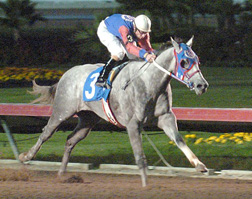
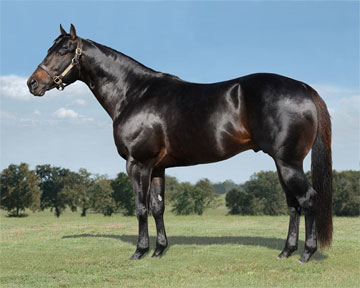
Racing Quarter Horses (most have a huge % of TB blood) do look alike. They are selected to break fast, run flat out, for short distances around 1/4 mile and up to 1/2 mile.

Dash for Cash
Image

Snowbound Superstar
Image


Snowbound (TB) sire of Snowbound Superstar
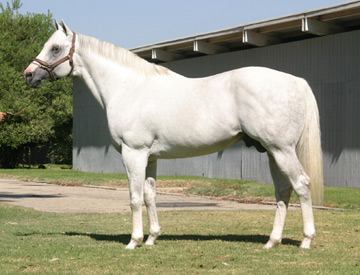
Image

High Time (TB)
Image


Three Bars (TB)
Image

Azoom
Image


This is a pretty random list Azoom is just a random QH picked from a list at Stallionsearch.com, Three Bars (TB) had a huge impact on the QH breed, as did Dash for Cash. Snowbound (TB) and his son Snowbound Superstar (AQHA) are modern examples of mining the TB gene pool for sprinters, and High Time (TB) was brilliantly fast for 3 furlongs, and is very tightly inbred to Domino.

So how 'bout some discussion on why this conformation works so well for short and fast?

User avatar
Pan Zareta
Breeder's Cup Winner
Posts: 2074
Joined: Wed Dec 22, 2004 10:55 am
Location: west TX boonies

Postby Pan Zareta » Sun Jan 17, 2010 2:04 pm

Major TB influences in the contemporary QH-

Azure Te
Image

Beduino
Image

Bold Venture
Image

Chicaro
Image

Find A Buyer dam of Dash For Cash Image

Piggin String unraced as a TB; AQHA Champion Quarter Running Horse 1943-46
Image

Raise A Native
Image

Rocket Bar (Three Bars' most influential son)
Image

Top Deck
Image

Shammy Davis
Chef de Race: Classic
Posts: 4451
Joined: Sat Oct 02, 2004 8:23 am

Postby Shammy Davis » Sun Jan 17, 2010 4:36 pm

What stands out to me most predominately is the strong shoulder and upper foreleg. Very large barrels are also apparent. Preportionately, they all are very balanced. I noted that the pasterns and cannon are balanced. The rule of thumb is that the pastern should be about half the length of the cannon. Noticeably, all have a croup equal to or higher than the withers. Those shown instride have powerful looking forelegs with reach. The hips through the gaskins also are very powerful looking. We see that in the TB, but I must admit w/the QH it jumps out at you. The TB examples by Pan Zareta surely compliment what we think of as QH conformation. It appears that all have small ears.

On the other thread, we discussed the conformation of SHAM vs SECRETARIAT. SECRETARIAT does in fact have a QH build. SHAM is definitely a different breed of horse. I don't know whether anyone would concur but I think ALYDAR has somewhat of QH look.

I'm going to take sometime an look a each independently. This was a cursory look. All are truly beautiful specimens.

xfactor fan
Breeder's Cup Winner
Posts: 2212
Joined: Thu Sep 16, 2004 8:46 pm

Postby xfactor fan » Sun Jan 17, 2010 8:37 pm

Domino Major source of TB speed.

Image


High Time Really inbred to Domino
Image

What jumps out is the difference in muscle type. Domino is looks to have lean slow twitch muscles, and High Time bulky fast twitch muscles.

Matchemforever
Maiden Special Weight
Posts: 169
Joined: Wed May 14, 2008 12:07 pm

Postby Matchemforever » Sun Jan 17, 2010 8:53 pm

Not a lot of time to study, just some first impressions:

Short length of shoulder, even if some angulation but straighter in most cases.

Long arm, more upright. Would think this is more of a trait you want in jumpers but probably not with the shorter shoulder. I think this tends to make the forehand look more massive.

Tend to think there are more tied in elbows in this group. Why that might help a sprinter is beyond me, so maybe I'm seeing things.

Less angulation from point of hip to stifle. Sometimes this seems almost straight.

Domino looks lean but that photo is racing shape. Doe have the straighter angle, point of hip to stifle.

Edited to say:
I should have said, femur or thigh appears to have less angulation, rather than from point of the hip.
Thought about this today and was wondering if a straighter femur would give the animal more ability to get down low behind and get off fast, even if it wasn't something that that angulation could maintain. Would the horse have more ability to "fold"? That is not the most desirable conformation trait for most uses. But in sprinters, they need to get up to speed fast.
Last edited by Matchemforever on Mon Jan 18, 2010 3:36 pm, edited 1 time in total.

Shammy Davis
Chef de Race: Classic
Posts: 4451
Joined: Sat Oct 02, 2004 8:23 am

Postby Shammy Davis » Sun Jan 17, 2010 9:02 pm

Noticeable w/High Time like others represented is the fact that the croup is higher than his withers, unlike Domino.

I don't know what this means related to performance though, other than the fact that it shifts weight forward. My guess is that forward weight would be less problematic over short distances. I think eventually the movement of the center of gravity forward would take its toll on performance at a distance. It might also affect the long term utility of a sprint horse.

For those that know, is a higher croup normal for the QH? I haven't looked closely at QH in ages. The pictures represented on this thread show equal or higher croups.

Matchemforever
Maiden Special Weight
Posts: 169
Joined: Wed May 14, 2008 12:07 pm

Postby Matchemforever » Mon Jan 18, 2010 8:45 pm

http://quarterhorselegends.googlepages.com/home

Some more to look at. I think the "legends" part is subjective but enough of them here.

Some of these pictures definitely show a downhill build. But some of these horses have pretty good top line if kind of goose rumped.

Ideally, a QH would not be croup high.

Looking at High Time, and that roof line in back, I think his withers are probably even or a little higher than his croup. Looking at the fence line, it's not quite level-which got me to looking at his feet and he looks pretty flat footed in front in this picture.

The mare looks to be higher as does Beduino.

You can find a picture of Domino in the site above, taken when he was at stud, that shows him in non-racing shape.

What I notice a lot in the QH pictures, are the short cannon bones and low set hocks of many. Seems the more TB, the more that goes away, for the most part.

It's hard to tell about the withers/croup height in a lot of the pictures because of the way the horses are posed.

I don't think a good performance horse, and I'm not talking Western "Pleasure", is going to be very downhill built. What I'm seeing more of that's interesting, is longer backs than I expected.

You can see as the QH gets to more modern times, how the bone gets lighter and the feet smaller.

Dave C
Restricted Stakes Winner
Posts: 812
Joined: Thu Sep 16, 2004 11:25 pm

Postby Dave C » Tue Jan 19, 2010 8:38 am

The question is with these QH's loaded with TB blood is if you trained them to run longer, could they? The bulk would definitely disappear as the muscle converted to predominantly aerobic activity.

vineyridge
Grade III Winner
Posts: 1195
Joined: Fri Jan 28, 2005 9:41 am

Postby vineyridge » Tue Jan 19, 2010 11:47 am

To my uneducated eye, most of the photos ARE of downhill horses. To me that means that the point of elbow is lower than the stifle. With that conformation and very powerful short twitch muscles, I would think that you would get the same benefits that jackrabbits do from being able to push off with a spring from the hindquarters.

I wonder if anyone has ever measured QH hang time with all four feet off the ground during their strides--and compared it to non-sprinter stride?
Thread Killer Extraordinaire

vineyridge
Grade III Winner
Posts: 1195
Joined: Fri Jan 28, 2005 9:41 am

Postby vineyridge » Tue Jan 19, 2010 12:12 pm

Dave C wrote:The question is with these QH's loaded with TB blood is if you trained them to run longer, could they? The bulk would definitely disappear as the muscle converted to predominantly aerobic activity.


QHs don't have nearly as many Type II muscle fibers that can convert. From what I understand, the short twitch muscle fibers that characterize QH bulk are true Type I muscle fibers and are set in concrete at the time of birth. So one would have to believe that all the training in the world would not turn them into long distance runners. Otherwise, there would be a whole lot more top class QH endurance horses than there are.

But I could well be very wrong, as it's been a few years since my research into the scientific literature on the subject.
Thread Killer Extraordinaire

xfactor fan
Breeder's Cup Winner
Posts: 2212
Joined: Thu Sep 16, 2004 8:46 pm

Postby xfactor fan » Tue Jan 19, 2010 1:38 pm

My understanding is that there are three types of muscle tissue. Type I fast twitch, Type II slow twitch, and Type IIa which can convert from type II to Type I.

In addition the percentages of these types are fixed at birth. If a horse has a large percentage of Type IIa, then there can be a radical shift in appearance--the horse will either bulk up, or slim down.

And since the TB that have made contributions to the QH bred seem to have come from the sprinting end of the TB gene pool, they probably don't have a lot of slow twitch muscles to begin with.

But if you were trying to get QH's to run long, I'd look at atypical conformation. Horses that are long and lean not bulky. and probably horses that were considered to slow to run 1/4.

Dave C
Restricted Stakes Winner
Posts: 812
Joined: Thu Sep 16, 2004 11:25 pm

Postby Dave C » Tue Jan 19, 2010 5:31 pm

Type I muscle is rare and is primarily found as cardiac muscle and in a couple of other places. There is Type IIa and Type IIb which are your fast and slow twitch as well as Type IIc which is an intermediary type which may or may not be the transitional for when IIa is converting to IIb or vice versa. Type IIa will freely transition to IIb and vice versa under training regimens. Type II will never transition to Type I or vice versa. If you do not wish to take my word for it I will provide the citation from my physiology text books.

vineyridge
Grade III Winner
Posts: 1195
Joined: Fri Jan 28, 2005 9:41 am

Postby vineyridge » Tue Jan 19, 2010 5:51 pm

If you look at human runners, there is a huge difference between sprinters and middle and long distance runners. It's not just based on body type, but on actual differences between muscling.

Lean and rangy is the paradigm of the marathoner, while compact and bulky is the paradigm of the sprinter.
Thread Killer Extraordinaire

vineyridge
Grade III Winner
Posts: 1195
Joined: Fri Jan 28, 2005 9:41 am

Postby vineyridge » Tue Jan 19, 2010 5:56 pm

Oops. Type I is the endurance muscle.

Found this Tufts article, but don't know if it is completely up to date.

http://www.tufts.edu/vet/sports/quarter.html#horse

Found this study on horse muscles:
http://www3.interscience.wiley.com/jour ... 1/abstract
Last edited by vineyridge on Tue Jan 19, 2010 6:33 pm, edited 1 time in total.
Thread Killer Extraordinaire

vineyridge
Grade III Winner
Posts: 1195
Joined: Fri Jan 28, 2005 9:41 am

Postby vineyridge » Tue Jan 19, 2010 6:28 pm

PZ, what the heck is this article saying? I can't translate the scientese at all.

Sounds mighty interesting on the face of it, but I can't even make out where the eyes and nose and mouth are from the jargon.

http://physiolgenomics.physiology.org/c ... ct/40/2/83

Where I'm hanging up is on the meaning of "gene expression" in the context of the research.
Thread Killer Extraordinaire